Showing posts with label Beef. Show all posts

Jun 2, 2016

Stir-fried Sirloin with Snowpeas

Because I've not been using my BPI Express Online account often enough, I've forgotten my password and had to reset it, and to activate the new password, I had to go to the nearest ATM and perform the activation.

Getting there I found that all the parking slots near the ATM were taken, and the only vacant slot was that reserved for Fresh Option customers. So it was two things -- either kapalan ko ang mukha ko and park even if I was actually going to the ATM, or buy something from the Fresh Options meatshop.

I suppose you know what happened. And that's where I got the sirloin for this recipe.

STIRFRIED SIRLOIN (BEEF) WITH SNOWPEAS

What's In It?

500 g sirloin, cut across the grain into 1.5" x 0.5" strips
3 T oyster sauce
3 T light soy sauce
2 T rice wine
5 T cornstarch
2 T brown sugar
1.5 t ground black pepper
1 t sesame oil
1 medium onion
half a head of garlic
3 T cooking oil (for sautéing)
1/2 cup water
200 g snow peas

Kitchen Conjugations:

Prepare marinade by mixing oyster sauce, soy sauce, rice wine, brown sugar, black pepper and sesame oil. Mix in sirloin strips and cornstarch, blend well.  Set aside and allow to marinate for at least 20 minutes.

Wash snowpeas and remove ends.  Set aside.

Peel and slice onions.  Peel and mash garlic.  Set aside.

Heat water in a wok or frying pan until it boils.  Drop and blanch the snow peas for half a minute.  Remove from pan and set aside. 

Drain water from the pan and add cooking oil. Over medium heat saute onion and garlic for about 2 minutes. Turn up heat then add in marinated sirloin, stir a little and cover to allow the beef to cook, for about 2 minutes.  Uncover and turn the beef slices to allow the other side to cook. Cover and leave to simmer for 2 minutes.

Stir then check seasonings.  Adjust if necessary. Add in snow peas, stir a little to allow some of the beef drippings to coat the pods for half a minute.  Remove from fire and serve hot. 

Best enjoyed with steamed rice. :)


Mar 2, 2014

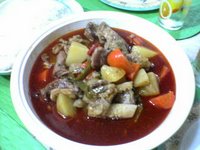
Korean Beef Stew ala Kimchi

People my age would remember Kimchi as a popular restaurant in SM Foodcourt whose specialty is the Galbi Jim, or Korean Beef Stew. Unfortunately though, perhaps with waned popularity and the high cost of leasing and maintaining space in the mall, Kimchi branches have become fewer and fewer, replaced by glamorized 'turo-turos.'

We had friends over for dinner last Thursday and for a treat I decided to make this dish. Initially I considered using one of the recipes I found in Google, but decided winging it, based on what I think should be in it, from the memory of the taste of the dish. (People close to me know that this is how I cook-- approximating flavors from memory.) I think I was able to really come close to the Kimchi recipe. :)  I would probably use a different gochujhang (Korean chili paste) brand, next time though, as this one  wasn't as spicy as I wanted.

KOREAN BEEF STEW (GALBI JIM)

What's In It?

1 kg. beef short ribs
1 large red onion, peeled and sliced
1 head garlic, peeled and mashed
1 cup Kikkoman soy sauce
1/2 cup brown sugar
1/2 cup Chinese cooking wine
Water
2-4 tablespoons gochujang (Korean chili paste)
1-2 tablespoons sesame oil
Bird's eye chilies (siling labuyo), optional
1 bunch onion leeks, washed and sliced diagonally into 1/2" lengths
Toasted sesame seeds (for garnish)

Kitchen Conjugations:

Wash the beef short ribs in cold water, removing slime and fat. Place them in a stock pot, and add in water to the level just enough to cover the ribs. Boil over high heat for 3-4 minutes.

Remove all scum from the broth. Add in all ingredients except the leeks, sesame seeds and chilies. Let boil some more for about 5 minutes, then lower heat to simmer the dish for about two hours. Yes, that long! Could be longer, if you had the misfortune of buying tough meat...

Check from time to time if you need to add more water. Check and adjust seasonings, too. You may need to add more sugar and/or cooking wine should you opt to add water. Add salt (not soy sauce) for a little more saltiness. Warning: adding more soy sauce instead of salt will make the broth too dark.

You can add the chilies at this point if you find that the chili paste has not spiced things up to the level desired. While waiting you can also slice the onion leeks, toast the sesame seeds and steam some rice. :)

This dish is best cooked till the meat gets to fall-off-the-bones tenderness. Test by poking a piece with a fork. If the tines get through without much effort, the meat is tender enough.

Garnish with onion leeks and toasted sesame seeds. Serve hot with steamed rice and sautéed mung bean sprouts (togue) on the side. Enjoy!

Notes:

1. Do you really need gochujang? Yes, if you want the authentic Korean taste and the reddish tint of the Kimchi resto version. I bought my chili paste from Shopwise. See how it looks like here.

2. Do you really have to use Kikkoman? Yes, or some really good soy sauce.  As this is a stew the meat absorbs and retains the flavors of the stewing broth so it is important that you use good soy sauce (and reserve the inexpensive soy sauce for regular fares like Adobo).

PS: Here's a special shout-out to my friend Mark Samson who introduced me to this dish at Kimchi. Thanks, Mark!


Jul 5, 2007

Callos


The theme of Lasang Pinoy's 19th edition -- Barrio Fiesta: Eat 'Til You Drop is the essence of the fiesta as I knew it, growing up. The feasting didn't just happen for a day -- the fiesta, the food and the merrymaking lasted for days, at least in our home.

How so?

The fiesta in our parish, The Holy Family, happens every last Sunday of the year. Before that, the following things happen: three birthdays -- my brother's, Dad's and mine (8,18 and 24) and Christmas Day. The parish fiesta usually falls somewhere from the 26th to the 29th. After that, the food-laden table on New Year's Eve and more eating on New Year's Day. (And a few days after that, my mom's birthday on the 4th.) Did you count? Eight days of eating.

And so you'd probably understand when I say it's pretty hard to remember whether there was exactly a dish we prepared especially for the fiesta. :)

Anyway, since the fiesta was practically sandwiched in between special holidays punctuated by non-stop cooking and eating, it has become a peculiar custom among us neighbors to make the fiesta a leftover potluck day. Long tables are laid out on the street and each household brings out something to share, usually leftover from Christmas day. The table gets lined with various versions of macaroni salad and/or spaghetti bolognese, laneras of leche flan and loads of ham. From time to time some lechon/lechon paksiw, morcon or festive-looking bread breaks the predictability and disappear fast from the long table.

My Callos was one such hit. :)


Thanks to the wonders of pressure-cooking, making Callos is no longer as tedious and time-consuming as it used to be. And because ox tripe and ox legs (cow's pata) are readily available from the meat section of major supermarkets, you need not wait for a fiesta to taste or serve it. :)

CALLOS

What's In It?

1 1/2 kilos beef tripe (tuwalya)
1 1/2 kilos ox leg (have the butcher chop it into 4 large chunks)
2 T garlic, minced
2 pcs. medium-sized onion, sliced
3 pcs. red bell pepper, sliced and seeded
1 kilo fresh tomatoes, blanched, peeled and sliced
1 cup grated quick-melt cheese
1/2 cup hot sauce
1 cup chick peas (garbanzos)
1 large potato, peeled and sliced into thick strips
3 pcs. Chorizo de Bilbao, sliced diagonally
1 large carrot, peeled and sliced into thick strips
4-6 bay leaves
5 teaspoons fish sauce
1/2 teaspoon pepper
pitted green olives (optional)

Wash ox leg and tripe. Boil in enough water for 30 minutes, then discard the stock*. Replace water (enough to cover the meats) and cook in a pressure cooker. The meats should be under pressure** for no more than 20 minutes. Remove from fire and let cool for 10 minutes. Check pressure by raising one of the vents. If no steam comes out it is safe to open the pressure cooker.

Remove meats from the pot. Chop tripe into rectangular strips. Remove the softened ligaments from the bones and chop into the same shape and size as the tripe. Reserve stock for later.

In a deep saucepot, saute garlic, onions and tomatoes in oil. Add bell peppers and tomatoes and saute for one more minute or until tomatoes have wilted. Add in tripe and ox ligaments. Season with fish sauce and ground pepper. Cover and let simmer for 10 minutes.

Add stock, chili sauce, potatoes, carrots and bay leaves. Simmer for 5-7 minutes or until the potatoes and carrots are fork-tender. Stir in grated cheese, let simmer for two minutes more. Remove from fire and garnish with olives if desired.

--------
Notes:

*This is so that the stock does not get masebo and yucky smelling.

**The pressure is on if the pressure cooker begins hissing. With some pressure cookers the vents actually lift a little and dance on their bolts like polka dancers. :)

Sep 15, 2006

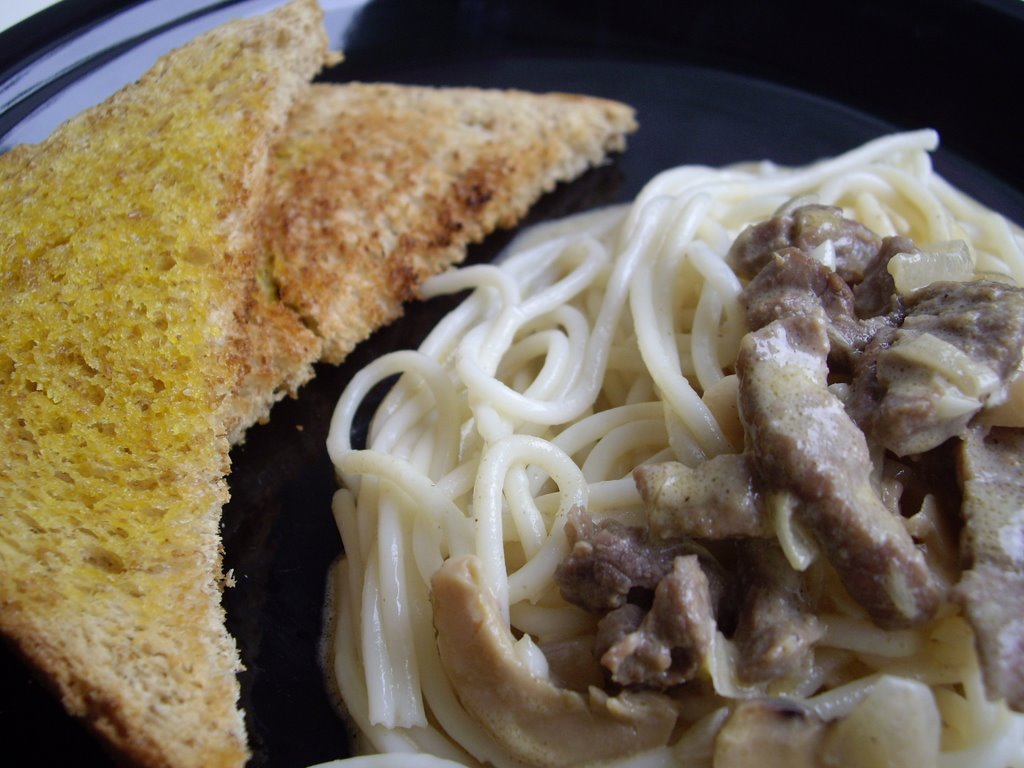
Beef Stroganoff


I've been finding more and more justifications for having pasta everyday. Variety. Less calories. Ease of use. And just because... I love pasta. Fact is, I've been dining at The Old Spaghetti House for almost everyday in the past two weeks. (More about that, later.)

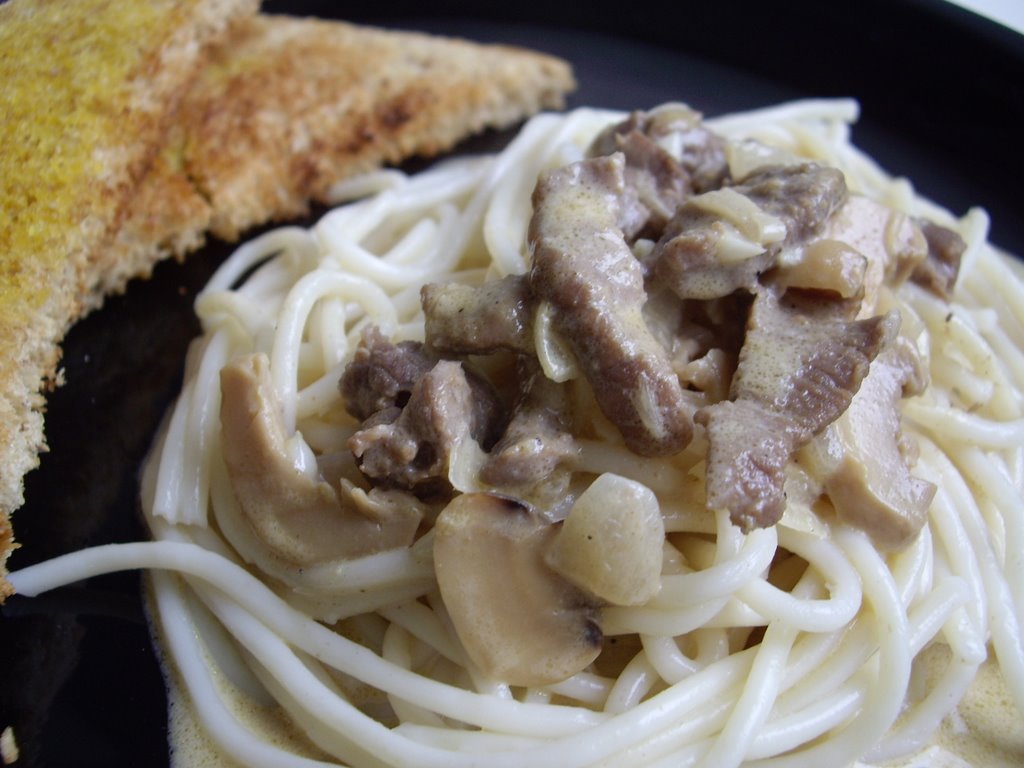
Anyhow, about a month ago (yes, yes, I've been blog silent...shush!) I made Beef Stroganoff (still part of my pasta series), for reasons I no longer remember, but more probably because that's what I wanted at the moment. :) Lesson here: Food bloggers ought to blog right away so that they not only share a recipe, but a story, too. :)

BEEF STROGANOFF

What's In It?

1/2 kg. spaghetti, cooked al dente
1/2 kg. beef sirloin, cut into strips
1 small can (about 1/2 cup) button mushrooms, sliced into strips
50g. butter (about a 1" x 1" x 1" cube) or 3 T garlic margarine
5 cloves garlic, minced (unnecessary if you're using garlic margarine)
2 medium onions, chopped finely
1 beef bouillon cube dissolved in
1/2 c hot water
1 c sour cream (or all purpose cream + 2 t vinegar or calamansi juice)
1/2 t mustard
salt and pepper to taste

Kitchen Conjugations:

Melt half of the butter or margarine over medium heat, then saute garlic and half of the onions until onions are soft and translucent. Add mushrooms and stir fry for one minute. Remove from heat. Melt the rest of the butter or margarine, saute the rest of the onions. Add in the beef and stir fry until beef loses its pinkish tint. Add in beef broth, salt and pepper. Boil then simmer until beef is done.

Stir in the mushrooms and onions, simmer for 30 seconds then stir in sour cream and mustard. Serve over cooked pasta (spaghetti, fetuccine or tagliatelle) or steamed rice.

Aug 9, 2006

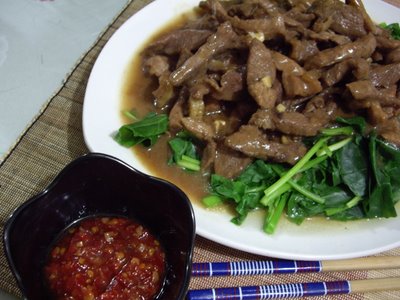
Beef with Gailan

I guess it's pretty obvious by now, but let me say it nonetheless -- I love entertaining. If I ever win the lotto* one of the things I'd probably do is have people over for a dinner party every single day! :) That after buying all the tableware and cutlery I've swooned and pined for, a la Marketman. :)

Last Sunday I had another "gotta feed people" attack and invited my in-laws over. We had:


1) Beef with Gai-lan. We were in Arranque Market again that Sunday morning and among the items we picked up were Gai-Lan (Chinese broccoli leaves) and spinach. I don't know if 'twas the recent spate of typhoons that did it, but the price of gai-lan went up 150% (from P50.00 per kilo to P180!)

My first taste of the dish was at Mr. Peter Lee's Tea House and I've tried to replicate it since. I've come up with the next best thing (I think), complete with the accompanying Chili Garlic sauce (by Lee Kum Kee). The recipe's below.

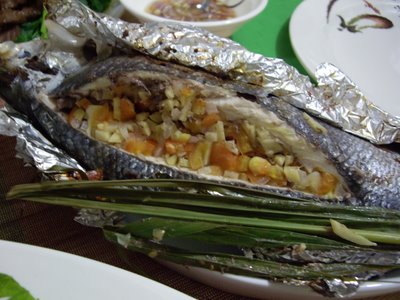
2) Grilled Tanglad-Laced Bangus, which was a concession to my fish-manic husband. And because we have pots (emphasis on the plural**) of tanglad (lemon grass), he put a few bunches in before wrapping the fish with aluminum foil sheets. The mixture of aroma from the ginger, onions, tomatoes and the tanglad steaming out when we opened the wrappings was fantastic. You would have wanted to re-open the foil wrapping over and over for a whiff. :)

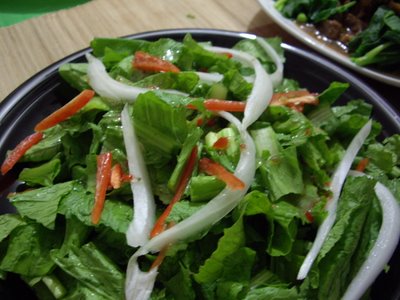
3) Mustard Greens with Italian Dressing. My husband has made a similar salad before, but with a different dressing (onions in vinegar). This time we tried bottled Italian dressing, drizzled on the thoroughly washed greens garnished with bell pepper and salad onion strips. I had anticipated a slightly bitter aftertaste as there was the first time I had mustard greens but surprise -- had none of that at all! The greens were yummy!

(O magugunaw na talaga ang mundo, former out and out carnivores like myself are repenting?)

Here's what I did with Beef with Gai-Lan:

What's In It?

  • 1/2 kg. beef, cut across the grain into 1/2" wide strips
  • 1/4 cup glutinous rice wine (you can substitute with chinese cooking wine, dry sherry or mirin)
  • 1/2 cup light soy sauce
  • 1/2 teaspoon ground black pepper
  • 1-2 dashes sesame oil
  • 1/4 cup cornstarch
  • 1 medium onion, sliced
  • 5-6 cloves garlic, crushed
  • 3-4 tablespoons olive or canola oil
  • 1/4 kg. gailan (chinese broccoli leaves)

Kitchen Conjugations:

  1. Marinate beef in rice wine, soy sauce, black pepper, sesame oil and 3 cloves garlic for at least five minutes.
  2. While beef marinates, wash gailan and trim off hard parts (bottom end of stalks), separating the leaves into individual stalks. Wash in running water, or soak for 3 minutes then rinse.
  3. Heat some water in a deep pan and blanch the gailan. The leaves must be kept green and crisp-tender. (Cook in boiling water for 20-30 seconds only.) Remove from heat and transfer to serving plate.
  4. Heat oil in a wok. Add in onions and saute until translucent.
  5. Add in garlic, saute for 30 seconds, then add in beef (without the marinade).
  6. Stir-fry beef for 3 to 4 minutes over high heat.
  7. Stir in cornstarch into the marinade, dissolving lumps.
  8. Add in the marinade into the wok, continuing with the stir fry for 30 seconds or so, or until the sauce is thick.
  9. Pour the mixture over the blanched gailan. Serve hot, with chili garlic sauce for a little kick. :)

=========

*That is if I ever decide to place a bet. :)

**Since we are renters, all our plants are potted; and that includes the lemon grass/tanglad. Lemon grass likes the sun and like other grasses grow fast requiring very little maintenance. What started as a single sprig has become three crowded pots of tanglad.

Mar 8, 2006

Caldereta

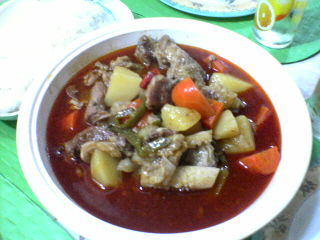
CALDERETA is Mike's favorite dish. And it's become even more so after he's tasted my version, he said. :)

Anyway, wanting to free up space in the freezer (the block of beef ribs measured about 8" x 12" x 6") and since we haven't been eating meat for a while (Mike has been very supportive of my diet), I decided to make Caldereta. (This was about a month ago.)

The secret to great-tasting, tender beef, which cannot be substituted, sorry -- is slow cooking. So as we planned to go attend an auction for a few hours I let the beef ribs stew in a pot, told the maid to watch it and replenish the stock from time to time, and to turn the stove off when the beef becomes tender. (Siempre may explanation pa ng what I think and what she should think as tender.) Then we left for the auction.

When we got home at 6 pm that's when I peeled and quartered potatoes and carrots and prepared the rest of the ingredients (bell peppers, scallions, liver spread, ground peanuts, siling labuyo, tomato paste, green peas, grated cheese and my special secret orasyon...hehehe).
Dinner's at 7, and while there was a huge grin of excitement and anticipation on Mike's face, the kids were saying, "Mommy, puede cheesedog sa 'kin? (JAM)" and "Mommy, gusto ko sabaw. (Gambel)"

Mike broke in, "No, kumain naman kayo ng iba. Try n'yo itong Caldereta ni Mommy. Promise makakalimutan n'yo'ng pangalan n'yo pag natikman n'yo 'to."

Gambel said, "Daddy, ayaw kong makalimutan ang pangalan ko." And Jam said, "Spicy 'ata, daddy." To which Mike simply said, "Sige na, kumain na lang kayo."

So, tentatively at first, the boys doused their rice with some sauce from the Caldereta.

Later though, I was seeing repeated thumbs-up signs from Jam. And from Gambel, between mouthfuls: "Congratulations, Mommy," and "Nice taste, mommy. You're the best mommy ever, ever in the world." and "I love you, Mommy!"

To which Mike said, "O, ano, bayad ka na?"

Ah, I love cooking. But better than that, I love cooking for my family. :)

Here's the recipe for when you wanna try it out:

CALDERETA

1 1/2 kilo beef short ribs, chopped to individual slices
2 T garlic, minced
1 large shallot, sliced
1 foil pack Del Monte tomato paste
5 T ground peanuts or 5 T chunky peanut butter
1/2 c grated cheddar cheese
2 cans Purefoods liver spread
1 red and 1 green small-sized bell peppers, sliced and seeded
2 medium-size potatoes, peeled and quartered (or cubed)
1 medium-size carrot, cubed
2 T soy sauce
3 pcs chili pepper (siling labuyo)
1/2 c sweet pickle chips
salt and pepper to taste
1/4 c cooking oil

Wash beef ribs and season with about 1 teaspoon of salt, set aside. Heat cooking oil in a frying pan, then stir-fry potatoes and carrots for a minute or until they are half-cooked. Remove vegetables, then saute garlic, scallions and bell peppers for about a minute. Add-in the ribs and fry each side for about one minute, or until both sides are brown.

Remove beef ribs and garlic-onion from the pan and transfer onto a stock pot or pressure cooker. Add water to cover, about 5 to 6 cups. Boil over high heat for 5 minutes, then simmer for 30 to 45 mins or until the beef is almost tender. (Cooking time is less in a pressure cooker; count about 10 mins from the time the hissing starts. Be sure that all the pressure has been vented before opening the lid.)

When beef is ready, add in the tomato paste, liver spread and pickle chips. Simmer for another 5 minutes, then add in chili pepper, potatoes, carrots and grated cheese. Continue simmering until the potatoes and carrot cubes are fork-tender.

Garnish with olives (if available) and red bell pepper slices.

Dec 27, 2005

Jing Du Spareribs

As I was saying in my email, we spent Christmas Day at home and I cooked as usual. Mike likes ribs, but I've tired of Caldereta --cooked and had it on his birthday last September; cooked it, on his request as part of our baon when we visited dad on All Souls' Day; cooked it again, on his request again, for our Christmas party a week ago...

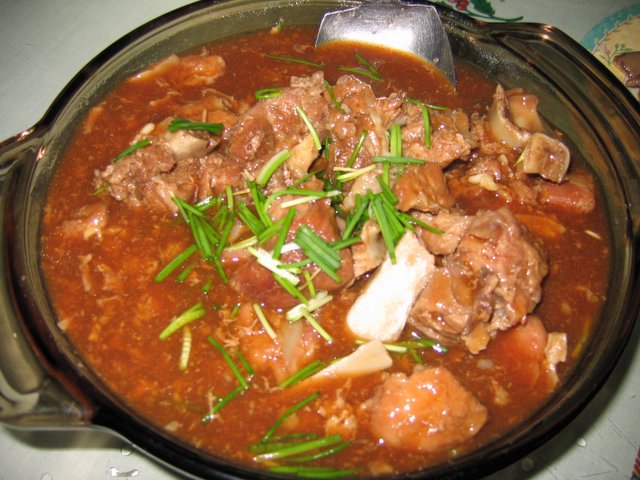
So I decided to try something new -- Jing Du Spareribs, a cantonese dish that's sweet-spicy and a bit tangy (quite like me!!). I first had the dish back when I was still with Amkor, liked it and meant to ask the concessionaire for a recipe, but never got around to doing that till I resigned. I searched around in the net for a recipe; wala. So I worked with the memory of what I saw, smelled and tasted almost 5 years ago.

Kinaya naman ng powers ko. :) The experiment turned out well. Mike liked it, hope you do too. Here's the recipe.

Jing Du Spareribs

1 kg short beef ribs, chopped into individual pieces
1 tsp iodized salt
4 to 6 cups water
1/2 c soy sauce
1/2 bot. Del Monte sweet blend tomato catsup
1/4 c washed sugar (in between brown and white)
1/4 c cooking wine or rice wine
1/4 c worcestershire sauce
1/4 c hot/red pepper sauce (reduce by half if weak-hearted...hehehe)
1 med. onion, sliced
4 cloves garlic, minced
3 T sesame oil

To thicken sauce:
5 T cornstarch, dissolved in
8 T water

Garnish:
green onions (sliced into 1/2" bits)
tomato wedges and toasted sesame seeds, for garnish

Wash beef ribs, transfer onto a pot or pressure cooker, add water to the level that just covers the meat. (This is important. This method is called braising.) Let boil and simmer for about 40 minutes (if using ordinary pot) or for 15 mins. from the time the cooker hisses, if you're using a pressure cooker. (Need I say, don't forget to let the cooker cool, or release all the pressure through the vents before opening the lid, if you're using a pressure cooker.)

When meat is almost tender, add the rest of the ingredients (except those for garnish) and simmer until beef is tender. Adjust seasonings if needed. (Me I like the tug-o-war among sweetness, spiciness and tanginess.) :D Add cornstarch mixture and let simmer, stirring until thick.

Best eaten while hot, garnished with spring onions, tomato wedges and toasted sesame seeds. And with steamed rice, of course. :) Posted by Picasa